The Silent Epidemic: Understanding the Stress Crisis in America!


Dr. Melissa Balizan
6 months ago
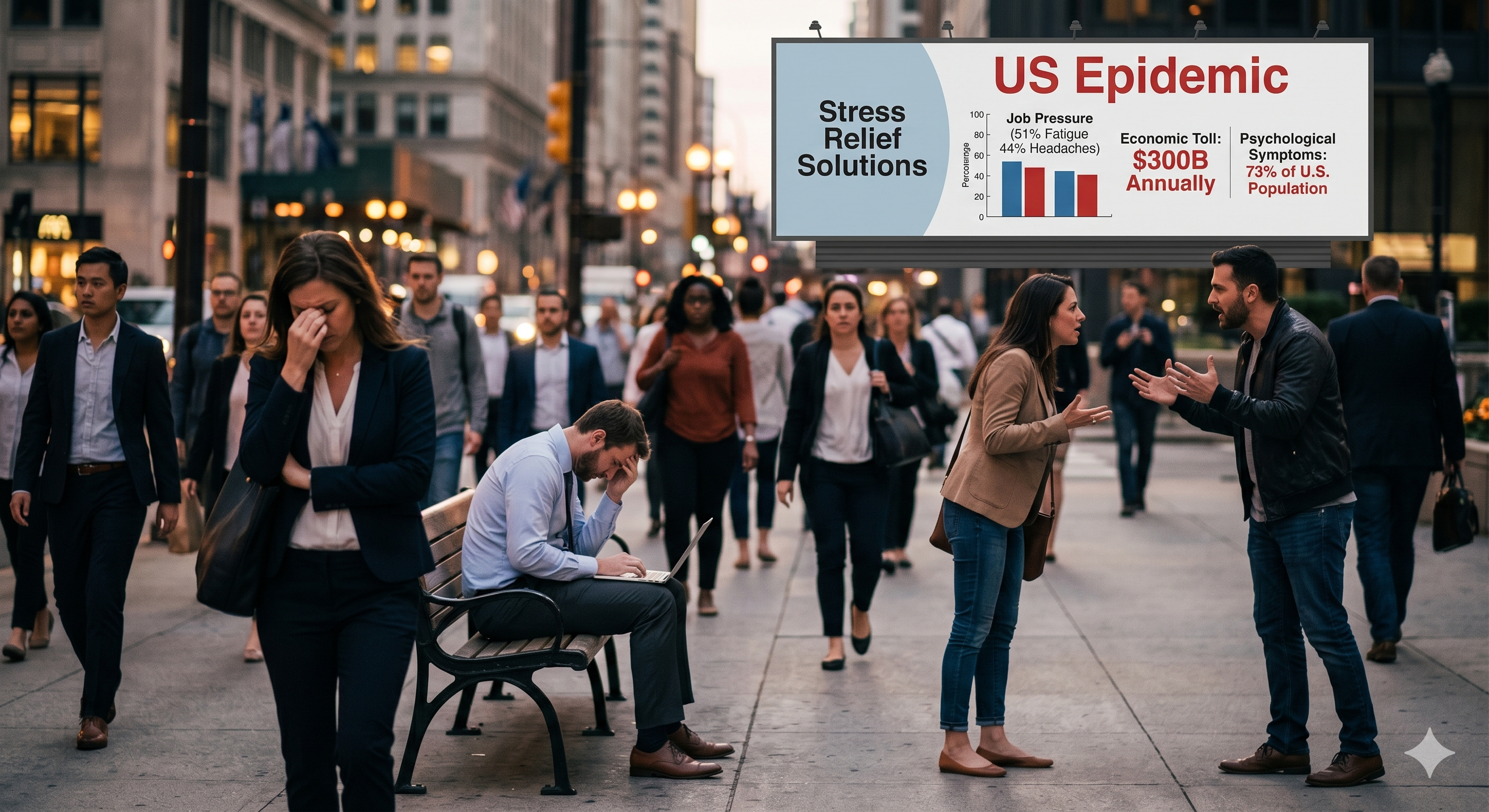
In today’s fast-paced world, stress has shifted from an occasional “fight or flight” response to a chronic state of being for millions of Americans. Recent data reveals a startling reality: stress has become a national epidemic, deeply impacting our health, our wallets, and our closest relationships.
The Staggering Stats
The numbers speak for themselves. Nearly 77% of the population regularly experiences physical symptoms caused by stress, while 73% struggle with the psychological fallout. We aren’t just “busy”—we are under a level of pressure that our bodies weren’t designed to sustain indefinitely.
What is Driving the Pressure?
While everyone’s life is unique, the primary drivers of stress in the U.S. consistently fall into three major categories:
-
Job Pressure: Between work overload and office politics, the “9-to-5” has become a 24/7 mental burden for many.
-
Financial Instability: With the rising cost of living and economic shifts, money remains a top-tier anxiety.
-
Health Concerns: Navigating the complexities of healthcare and personal wellness adds a heavy layer of worry.
The Physical and Psychological Toll
Stress isn’t just “in your head.” It manifests throughout the entire body. When we are chronically stressed, our bodies remain flooded with cortisol and adrenaline, leading to:
-
Fatigue (51%): That feeling of being “tired but wired” or simply exhausted regardless of sleep.
-
Headaches (44%): Tension headaches are one of the most common physical responses to mental strain.
-
Irritability and Anger: Psychologically, stress thins our patience, making us more prone to outbursts.
The Hidden Costs: Social and Economic
The impact of this epidemic extends far beyond the individual.
Socially, our support systems are taking a hit. More than 54% of stressed individuals report that their anxiety leads to arguments with loved ones. When we are under pressure, we often take it out on the people we care about most, leading to a cycle of alienation and further stress.
Economically, the toll is massive. Stress costs U.S. employers an estimated $300 billion annually due to healthcare expenses and missed work (absenteeism). It’s not just a personal issue; it’s a systemic one that affects productivity and the national economy.
Finding a Path Forward
Recognizing that you are part of this 77% is the first step toward change. Whether it’s setting boundaries at work, practicing mindfulness, or seeking professional support, addressing stress is no longer a luxury—it’s a necessity for survival in the modern age.
What are some ways you’ve found to manage the pressure this year?
To learn more about my work in concierge pharmacy and wellness, or to tune into my latest insights, visit the links below:
-
Official Website: DrMelissaBalizan.com
-
Podcast: VITAL with Dr. Melissa on eZWay
-
eZWay Wall of Fame: Dr. Melissa Balizan Profile
- eZWayNetwork: eZWay Network Affiliate
- eZWay Pitch Party:eZWay Pitch Party