The Role and Significance of Juneteenth in the American Democracy by Dr. h.c. Lisa E. Kirkwood – The True Stories Merchant™

Lisa E. Kirkwood
3 months ago
Cultural Diversity Highlights & Social Observances
The Role and Significance of Juneteenth in the American Democracy by Dr. h.c. Lisa E. Kirkwood – The True Stories Merchant™
In the month of June, we celebrate important events that, throughout decades and centuries, have shaped up our history, culture, and contemporary society. Let’s take a moment to acknowledge and recognize Juneteenth and its impact on American and global values and way of life.
Juneteenth (June 19) is a federal holiday commemorating the end of slavery in the USA, marking the day in 1865 when Union soldiers informed enslaved people in Galveston, Texas, of their freedom – over two years after the Emancipation Proclamation. Also known as Freedom Day or Emancipation Day, it is the oldest known, annual celebration of the end of slavery in the United States.
Issued by President Abraham Lincoln on January 1, 1863, the Emancipation Proclamation declared that all enslaved people in Confederate states currently in rebellion “shall be then, thenceforward, and forever free”. This executive order transformed the Civil War into a fight for human freedom, allowing the enlistment of nearly 200,000 Black soldiers and ensuring slavery’s end became a central war goal.
During the Civil War period, slavery came to an end in various areas of the United States at different times. On June 19, 1865, Union Major General Gordon Granger arrived in Galveston, Texas, and issued General Order No. 3, announcing that all enslaved people were free, months after the Civil War ended. Texas was the last state to enforce the Emancipation Proclamation, and June 19 acts as a second Independence Day for Black Americans, marking the long-delayed freedom of enslaved people.
The historical site of this announcement, Galveston Historical Foundation, continues to preserve the original location where General Orders No. 3 were read. Early Juneteenth celebrations date back to 1866, at first involving church-centered community gatherings in Texas. They spread across the South among newly freed African Americans and their descendants and became more commercialized in the 1920s and 1930s, often centering on a food festival. Participants in the Great Migration brought these celebrations to the rest of the country.
Interesting fact: Juneteenth is also observed by the Mascogos, descendants of Black Seminoles who escaped from slavery in 1852 and settled in Coahuila, Mexico.
Although Juneteenth commemorates the end of slavery, emancipation for the remaining enslaved population in two Union border states, Delaware and Kentucky, would not come until December 6, 1865, when the Thirteenth Amendment was ratified. That addition to the US constitution permanently abolished slavery and involuntary servitude across the United States.
While President Abraham Lincoln’s 1863 Emancipation Proclamation was a crucial wartime measure, it only freed enslaved people living in Confederate states. The 13th Amendment went a step further, instating emancipation as national policy and liberating roughly 4 million people from chattel slavery.
During the Civil Rights Movement of the 1960s, Juneteenth celebrations were eclipsed by the nonviolent determination to achieve civil rights, but they grew in popularity again in the 1970s, with a focus on African American freedom and African American arts. Beginning with Texas by proclamation in 1938, and by legislation in 1979, every U.S. state and the District of Columbia has formally recognized this event in some way.
Juneteenth became the first new federal holiday since Martin Luther King Jr. Day was adopted in 1983. Although observed for over 150 years, Juneteenth was officially signed into law as a paid federal holiday on June 17, 2021, gradually being adopted by all 50 states. Over half of them recognize it as a permanent paid holiday, while the others recognize it formally through proclamations or as a day of awareness; state government offices and public services remain open. Private sector observance, as it’s not federally mandated, remains at the discretion of individual employers.
As of 2020, additional American corporations and educational institutions, began treating Juneteenth as a company holiday, providing a paid day off to their workers, and Google Calendar added Juneteenth to its U.S. Holidays calendar. Also in 2020, a number of major universities formally recognized Juneteenth, either as a “day of reflection” or as a university holiday with paid time off for faculty and staff.
On this day, major news networks host specials and marathons on national outlets featuring prominent Black voices. Juneteenth has become a multicultural holiday with lectures and exhibitions on African American culture, public readings of the Emancipation Proclamation that promised freedom, singing traditional songs, and reading of works by noted African American writers, such as Ralph Ellison and Maya Angelou.
Community celebrations include picnics, rodeos, street fairs, cookouts, family reunions, park parties, parades, historical reenactments, blues festivals, and Miss Juneteenth contests. The holiday is also a celebration of soul food and other cuisines with African American influences. Red food and drinks are traditionally served, including red velvet cake and strawberry soda, with red meant to represent resilience and joy.
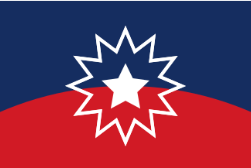
In 1997, activist Ben Haith created the Juneteenth flag, which was further refined by illustrator Lisa Jeanne Graf. The star at the center represents Texas and the extension of freedom for all African Americans throughout the whole nation. The burst around the star represents a nova and the red curve represents a horizon, standing for a new era for African Americans.
The red, white, and blue colors represent the American flag, the African Americans and their descendants, and the national belief in liberty, justice, and democracy for all citizens. This historical event honors their freedom and culture, as well as their contribution to our unified American society and history.
Source credits: Google, Wikipedia
Dr. h.c. Lisa E. Kirkwood – The True Stories Merchant™
Global voice. Soulful connector
Keynote speaker, 5 X Amazon bestselling author, expert consultant
Global Diversity & Intercultural Communication
Team Building & Development
Leadership & Empowerment
www.thetruestoriesmerchant.com
+1 323-364-3757
You must be logged in to like or comment on the blog